


Ask a rental house what actually tips over at gigs and the answer is rarely the top box. It is the moment somebody puts a fifteen inch sub on a stand drawn for a plastic satellite, the bass energy walks the feet across a hollow stage deck, and the whole column goes over between songs. A subwoofer stand is a different animal from the stand that carries the tops, and the spec sheet tells you so within three lines.
We have built both kinds at Ningbo Luxsound Technology since 2009, and the sub version is the one where cutting corners shows up fastest in the field. Below is what we would check, using the numbers from our own SS980R subwoofer speaker stand as the reference case.
Why a bass cabinet punishes a normal stand
A top box weighs twenty kilos and sits still. A sub of the same weight couples to the floor through the stand, and every kick drum hit travels down the pole into whatever the stand is standing on. Three things follow from that.
The load rating has to be honest, not optimistic. The SS980R is specified to carry 70kg, which covers a loaded twelve to fifteen inch cabinet with headroom for the clamping hardware. The base has to spread that load instead of concentrating it under two small feet. And the joint between cabinet and pole has to be machined, because a sloppy socket rattles audibly at sub frequencies long before it fails mechanically.
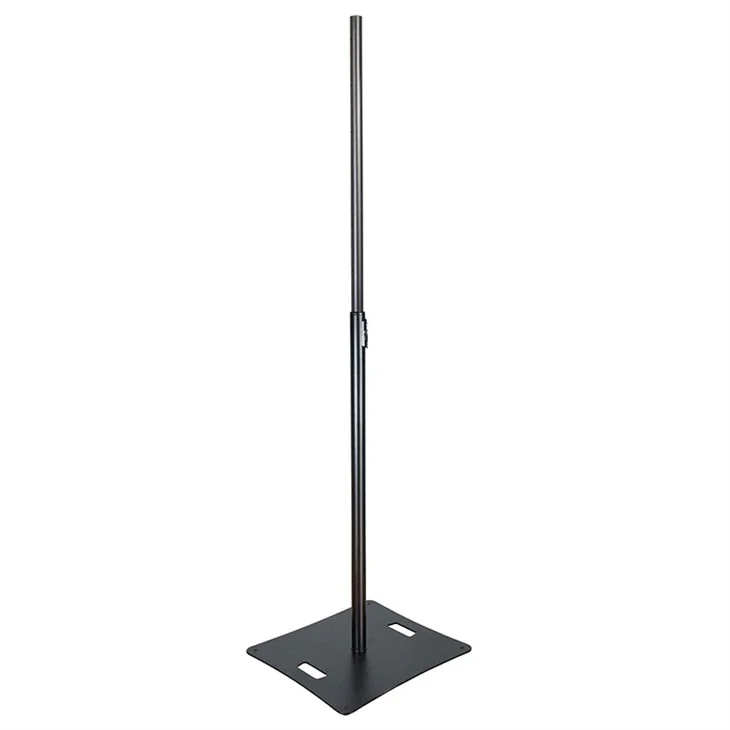
What a cast base plate does that tripod legs cannot
The base is where sub stands divide into two schools. Tripod legs are lighter and fold flat, which suits mobile DJs who pack everything into a hatchback. A cast plate is heavier and does not fold, and it wins everywhere else.
Our plate measures 55 by 50 centimetres and is gravity die cast, not bent sheet. It accounts for twelve and a half of the twenty kilograms the complete stand weighs, and that mass low down is exactly what stops a thumping cabinet from walking. The two slots pressed into the plate are carry handles, which matters more than it sounds when a crew is resetting a stage between acts. Four small feet at the corners lift the plate off wet grass and keep the paint off a polished floor.
On a hollow wooden stage the difference is obvious the first night. A tripod concentrates everything under three pivot points and the deck answers back. The plate asks the whole floor to share the work.
Height range without a wobble penalty
The column adjusts from 1.3 to 2 metres. That covers the honest question most buyers actually have, which is whether a sub should sit on the floor at all. Small rooms and cardioid arrays sometimes want the bass cabinet lifted so it fires over seating rather than into the back of a chair, and 1.3 metres is already taller than most furniture it would otherwise sit on.
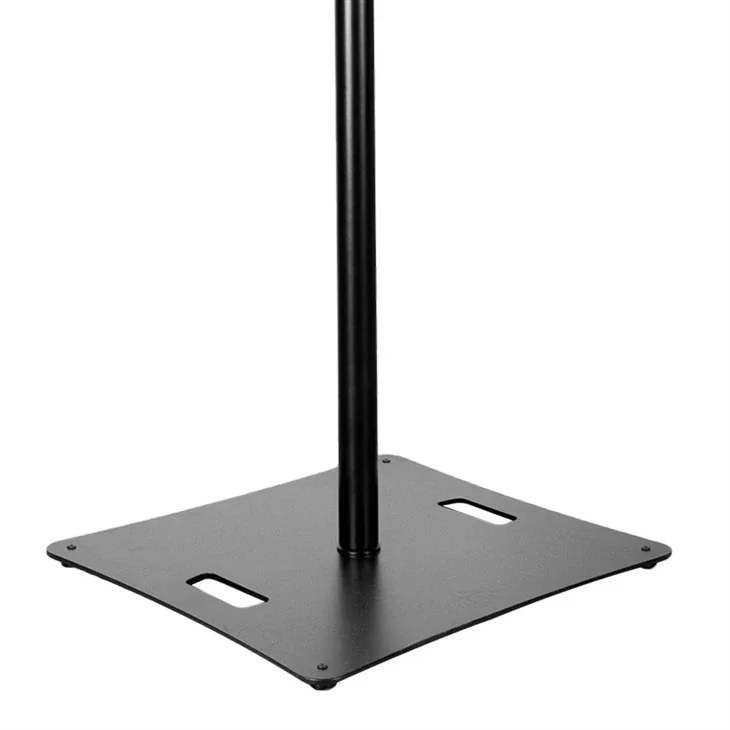
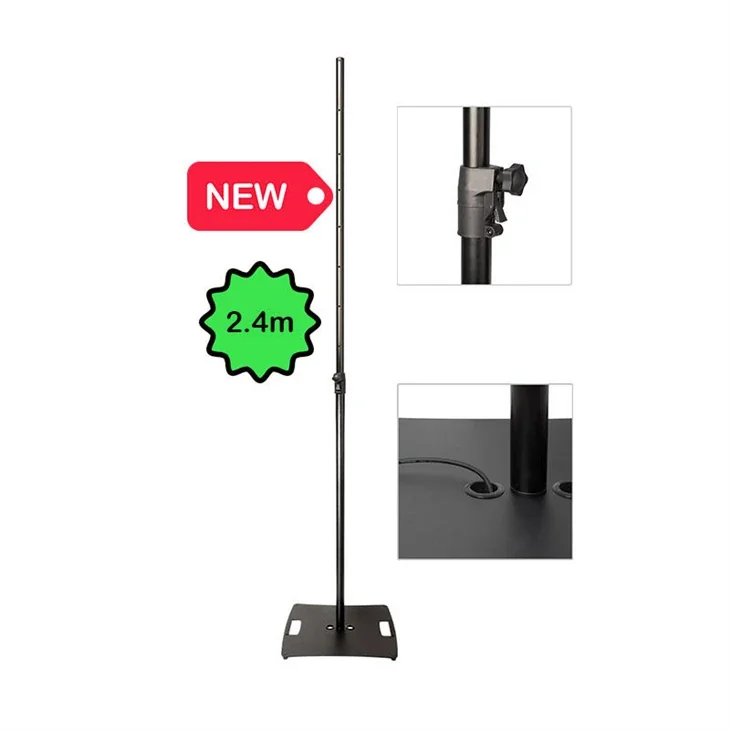
Where a plain column loses stability as it climbs, this one keeps its footing because the plate never narrows. If your range needs more reach than two metres, the heavy duty speaker stand with air cushion in our Yinyu line goes to 2.4 metres on the same flat base idea and is in stock and ready to ship.
The air cushion is a safety part, not a comfort part
Inside the shaft sits an air cushion. Its job is to arrest the inner tube if the clamp is opened while a cabinet is mounted, so the column eases down instead of slamming. Anyone who has serviced a stage rig has seen the alternative, a bare telescoping tube that drops freely the moment a knob slips under load.
For a buyer this shows up as a warranty question. Stands without a damper return with dented tubes and bent retaining rings. Stands with one come back with worn paint. The parts cost difference is small, the service history difference is not.
The M10 hole decides how the cabinet mounts
The top of the pole carries a threaded M10 hole. Two mounting habits meet there. A cabinet with a standard pole socket simply sits on the 35mm tube. A plate or bracket bolts down onto the thread, which is the option for cabinets without a socket or for fixed installs where the plate is screwed to the enclosure.
Specify which habit your market uses before you order. The same stand serves both, but the accessories in the carton differ, and it is the kind of detail that turns a re-order into a complaint if it is guessed wrong.
Tripods still have their place
We would not sell the plate as the only answer. Where the job is a pair of tops plus a small sub carried to a wedding, the folding 35mm speaker pole and a tripod remain the lighter kit. For tall one-box rigs, the crank up speaker pole lifts a heavy cabinet without a crew member hugging the column, and the gas spring speaker stand takes the effort out of height changes with its 550 by 500 millimetre steel base.
The honest test is the venue. If the stand lives on a hollow stage with a sub on top, order the plate. If it travels weekly and carries tops, a folding tripod costs your customers less per gig.
What a built to order run looks like
The SS980R is produced against an order rather than held on the shelf, so lead time is quoted per quantity instead of promised in advance. A typical run ships in brown cartons of 70 by 35 by 151 centimetres, one stand per box, and we quote the build window against your volume before the deposit. OEM branding starts at the carton print and runs through to laser marking on the base for distributor ranges. We ship DDP to most destinations, so the landed cost you model is the landed cost you pay.
If a stock item suits your launch better, the Yinyu heavy duty stand mentioned above is on the shelf and can move within a day, and we can quote the two side by side so you can compare margins honestly.
FAQ
Will the SS980R hold a loaded 15 inch sub safely?
The rating is 70kg and the die cast plate keeps the centre of gravity inside its footprint at full 2 metre height. Send us the cabinet weight and we will confirm the fit rather than guess.
Can we order the stand with our own brand on the carton and the plate?
Yes. The stand is built to order, so branding is a production decision rather than an afterthought. Minimum quantities for custom marking are confirmed when we quote.
How long does a built to order run take?
It depends on volume and the season, so we confirm the build window in writing with the quotation instead of quoting a generic figure. Tell us the quantity and the destination port and the answer comes back with the price.
Do you ship DDP?
For most destinations, yes. Quote DDP and the price you receive includes the freight and the customs leg, which keeps your margin model clean.
Send the cabinet, not just the weight
A photograph of the cabinet socket and the cabinet weight together are enough for us to confirm the mounting and the rating in one reply. If you want both versions quoted, stock and built to order, say so in the first message and the comparison comes back in the same sheet.


