


Nobody replaces a music folder because the cover broke. They replace it because page three tore out at the seam during a rehearsal, and after the fourth time the folder went in the bin. Sleeve construction is the whole story in this category, and it is the one thing catalogue photos never show.
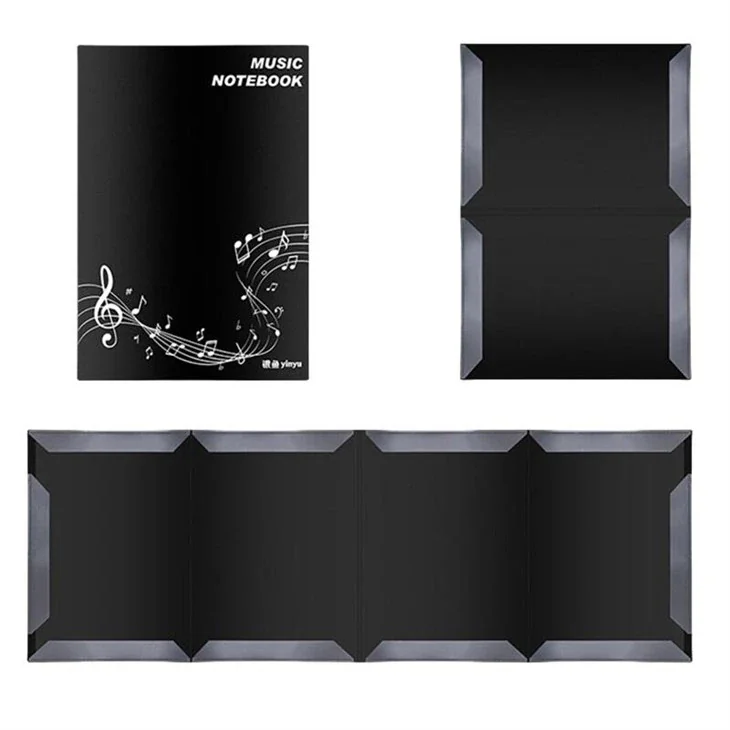
We make two folders for exactly this reason. The sheet music binder takes forty A4 pages in a hard shell, and the piano sheet music binder opens into six A4 pockets that lie flat. Different formats, same buyer, and the choice between them says a lot about how your customer actually performs.
Forty pages or six panels, depending on how the set flows
The forty page folder suits the player who carries a book. Choir members, worship teams and exam students fall in this group, they turn pages as they go and they need everything in one cover for the season.
The six pocket folder suits the player who never turns a page at all. Unfold it and the whole programme lies open in a single panel, which is why pianists and soloists like it. You can't stop a piece to flip a sleeve, so three or four facing pockets cover most recital programmes without any page movement mid-song.
There's a hybrid use worth knowing about. Some schools issue the six pocket version to ensembles and the forty page version to individuals, and the two sit at the same price level, so a department can stock both without a budget argument. Ask your supplier which format their existing stock skews toward before you set your own range.
Sleeves take the abuse, so grade the sleeve
Polypropylene is the standard sleeve material and it is not all the same grade. Thin sleeves go cloudy after a season of handling, and a cloudy sleeve is a reading problem, because glare off a scratched surface under stage light is exactly the thing a performer can't work around.
Ours run a thicker water resistant PP that stays clear, and the surface takes pencil marks that erase. That last detail sounds minor until you watch an accompanist work. They write on the sleeve, they erase it next week, and if the surface holds pencil ghosting after ten cycles it comes back from the school as a complaint.
Check the seal on a sample rather than the datasheet. Run a thumb along the closed edge of a filled sleeve and feel for lift. A sleeve that opens at the seam sheds pages into a music stand light, and they won't be found until the next rehearsal.
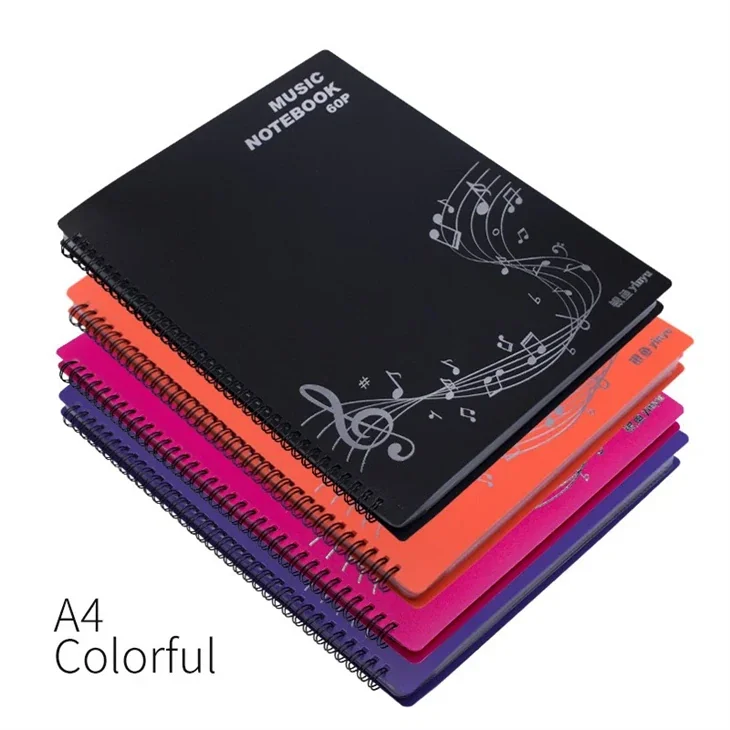
The hard shell does more than look tidy
A frosted hard shell does three jobs at once. It stops glare, which a gloss cover doubles, it hides fingerprints through a season of handling, and it protects corners in the bag that also carries reeds, rosin and a tuning fork.
The forty page folder's shell has a slight flex to it rather than a brittle snap. That's deliberate. A folder that lives in an instrument bag gets sat on, stood on and stacked under scores, and a rigid shell defends the first corner strike but cracks on the fifth. You want the shell to absorb rather than resist, and buyers can't tell the difference from a photo.
Folding formats have their own rule. The six pocket folder opens flat and closes to A4, and the crease line is the stress point, so it should fold without whitening. Fold a sample fifty times before you approve it. White stress lines at the crease mean the material batch is below spec, and they will split inside a school term.
Colour is a library system, not a decoration
Four colours, black, rose red, orange and purple, exist on our folders for an operational reason as much as a visual one. Ensembles that issue folders by section lose fewer of them. Sopranos in one colour, altos in another, and a folder left on a stand after rehearsal gets returned to the right shelf by a volunteer who can't read music.
For retail, colour is the cheaper version of a product line. One mould, four skins, and a shop shelf that reads as a range instead of a single SKU. Buyers who stock all four usually find one colour dominates in their region, and that's the reorder colour while the others hold the shelf.
Custom colour sits under OEM with a minimum of 50 binders per design, which is low enough that a school can match its own colours for a whole department. That MOQ is quoted on the standard shell, and artwork on the cover is a separate conversation.
Pairing folders with the stands already in the room
Folders ship well beside the hardware that holds them, and a buyer who already stocks stands should treat the folder as the add-on that lifts the average order rather than a separate line.
The compact folding music stand is the natural partner, light enough for students to carry with a folder inside the sheet pocket of the same bag. For departments that issue folders in volume, the music stand storage cart moves both between rooms, which solves the problem a folding folder can't, namely forty stands and forty folders changing classrooms twice a day.
Wind players worth your attention read from the same folder while seated, so the rest of the carton tends to fill with instrument stands from the Yinyu range. One shipment, one inspection, one set of documents. It's the same consolidation argument that runs through every category on this site, and it holds at folder volume just as it does at container volume.
What a folder order needs to be quoted
Ningbo Luxsound Technology has manufactured instrument hardware in Ningbo since 2009 and ships to more than 60 countries. Folders run beside the Yinyu stands production, so a first order can be small and still consolidate with hardware you already source.
OEM covers your colour set, your cover artwork and your packaging. ODM goes further, into panel counts or page formats, if your market needs a layout the two standard folders don't offer.
Nothing in this category is held as standing stock. Production runs against confirmed orders, we confirm availability and a production window when you enquire, and terms can be set DDP so duty and freight sit inside the quoted figure.
FAQ
Which folder suits a choir?
The forty page binder, because a season's repertoire stays in one cover and page turning is expected. The six pocket version is for programmes that must play through without turning.
Are the sleeves replaceable?
The forty page folder uses a loose leaf design, so pages can be reordered and replaced without touching the shell. Ask about spare sleeve packs if your customers refill often.
What is the minimum for custom colours?
Fifty binders per design on the standard shell. Cover artwork and packaging are confirmed separately on a sample before the run.
Do the folders survive being carried in an instrument bag?
The hard shell is specified for bag carry, and the folding format is designed to be opened flat daily. Order a sample and fold it fifty times if you want proof before the school year starts.
Can students write on the sleeves?
Pencil marks erase from the sleeve surface. Ink doesn't, and no PP sleeve tolerates it, so it's worth telling school buyers that at the point of sale.
Are these held in stock?
No, folders are produced against confirmed orders. Send the colour split and quantity and the quotation comes back with a production window and DDP terms.
Start with the sleeve, not the cover
Tell us whether your buyers turn pages or unfold them, which colours they stock, and the volume for the first run. We'll come back with a sample offer, a colour card and a DDP quotation against the quantity you name.


